The Palace of Eros
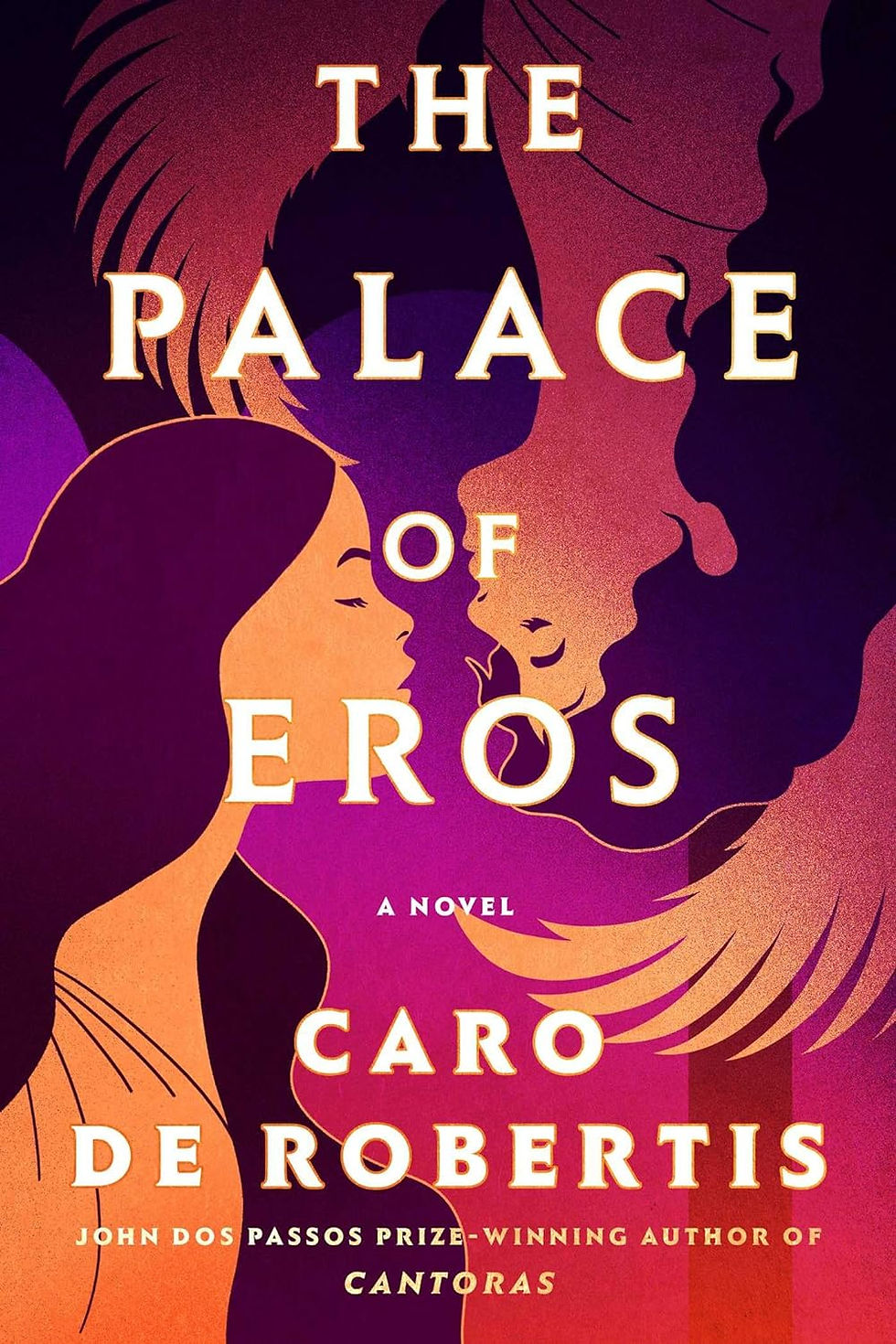
I first read The Palace of Eros in my in-laws’ garden, steeped in a season of shame-around-queerness and homegrown lack of acceptance. It drew me in instantly: beginning with an oracle-forward retelling of an ancient Greek myth, detailing generations of trauma and life, mincing no brutality or evil. I hadn’t read a Greek mythology retelling before, so as someone who almost exclusively reads sapphic books, it made sense that a gender-bending Psyche and Eros story was my first. It helped that it was an advanced review copy, and I had no idea what I was getting myself into. A few hours later, I was chapters deep in between the strawberry plants and the apple trees and openly weeping while I read.
This devastating retelling bleeds into breathtaking prose about wanting, longing, desire; weaving through richly erotic scenes, sensuality seeping into everything: eating, painting, enjoying nature. We wander through Eros’ sumptuous, mysterious palace with Psyche; through her yearning, her discovery of her ability to want , as simple as it is — and as traumatically unfamiliar as it is for women to desire, especially in the age of Greek mythology or high-control family and cultural systems.
Psyche and Eros are both rich and dynamic characters, and while The Palace of Eros is based on a resounding plot, it also has incredible character development and healing that I wasn’t expecting. Most of the book is from Psyche’s point of view — I would have loved to hear more of Eros’ inner workings, but it was beautifully told.
One of Psyche’s biggest longings is for Eros, the gender-expansive nonbinary deity visiting her in night’s shadows. We read of Eros’ monstrous pain and her shame induced by the predatory male gaze. After rescuing Psyche, Eros cast a shrouding spell to protect their relationship from the view of the gods. It only works for so long, however, and soon we are thrown into more atrocity and carnality — this time, of the gods rather than man, which Psyche knew too well. Slowly, Psyche begins to ask: How costly is freedom? And what feels free?
I bought a physical copy of The Palace of Eros for queer book club and made all my friends read it. I had been so altered by it.
Not only was I enraptured with Psyche and Eros, but I also began wondering: What do I want? What is freedom to me? What do I desire? Where can I see and experience sensuality where I wouldn’t have expected? What is the future we dream of for queer and trans people to come? And how are we a fulfillment of the dreams of our queer and trans ancestors? How do we honour their pain, work and stories — and our own? How do we want and dream when the powers that be try to punish and hide us? What are the ways we hide ourselves and quiet our stories?
This is why queer and trans books are important, especially those written by queer and trans people. Caro De Robertis (they/them), a queer Uruguayan author, should be on every queer person’s reading list this Pride. Reading queer books counteracts society’s demonization of queer joy, queer pleasure and queer desire, and The Palace of Eros does that surpassingly well.
Ab Wilson is a trans nonbinary disabled writer, voracious reader, and parent living on stolen Syilx Okanagan territory. More of their book recs and opinions can be found at @sapphicbookcrush.
